
31 May 2024 • Bangkok, Thailand
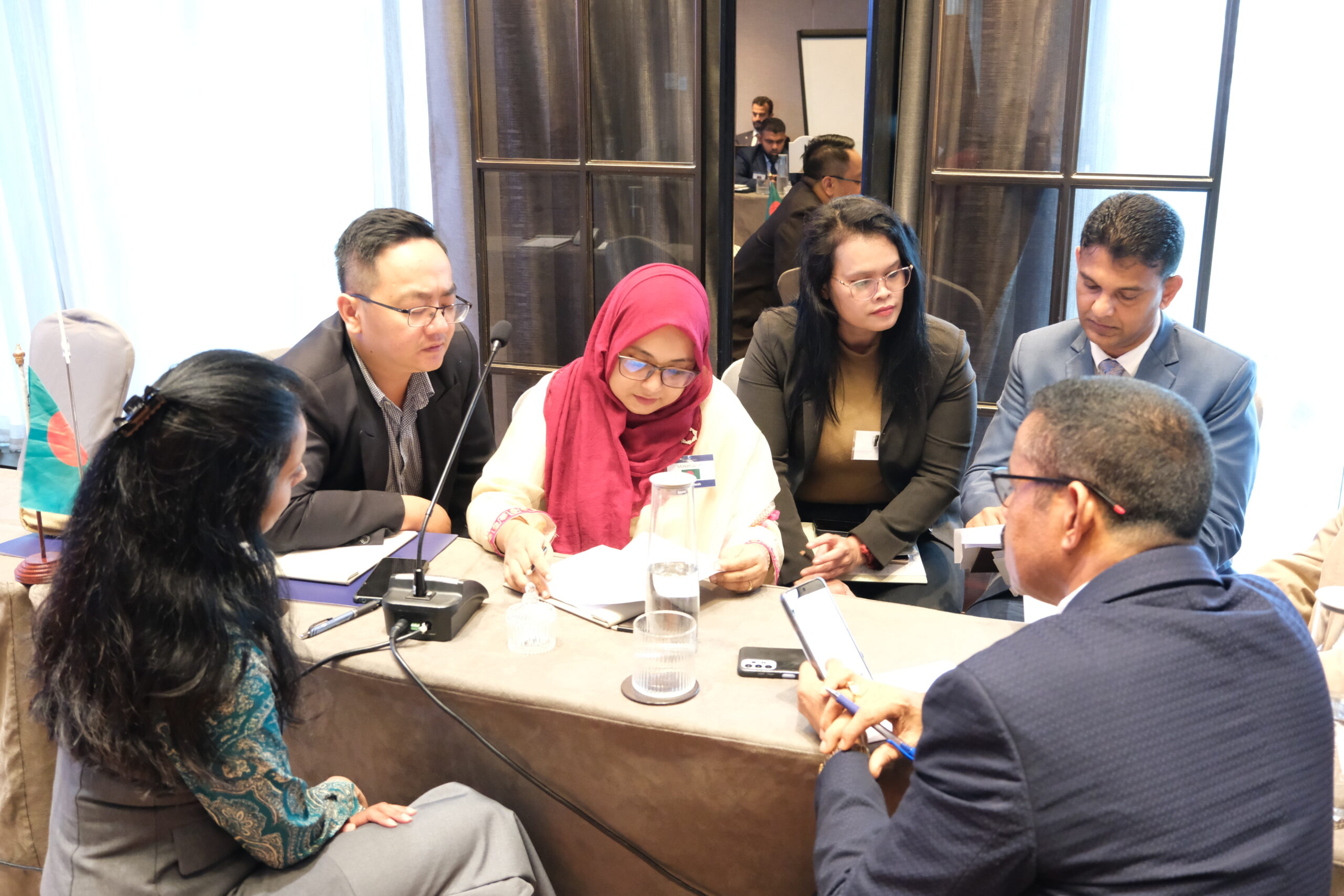
The Regional Support Office (RSO), in partnership with Freedom Collaborative, brought together eighteen international organisations and civil society groups from across Southeast Asia, both in–person and virtually at the offices of the RSO in Bangkok, to discuss and identify actionable responses to trafficking for forced criminality into cyber–scam centres.

Building on recommendations made in ‘Trapped in Deceit’— the RSO’s policy brief released in early 2023 which provided a situational overview on the then-emerging issue of trafficking into cyber-scam centres—the workshop sought input from regional actors and experts to prioritise and strengthen recommendations by assessing progress made since the brief’s release.
The discussions yielded concrete pathways to enhance regional responses to this complex challenge:
- Engaging the private sector, particularly tech companies, financial institutions and crypto exchanges, to develop tools for identifying and removing suspicious content, enhancing user protection, and facilitating the retrieval of victims’ money. Participants emphasised the need for tailor-made approaches for different types of private sector actors.
- The need for better cross-border collaboration and information sharing among law enforcement agencies to effectively combat trafficking into cyber-scam centres. Participants discussed the importance of building trust, starting with smaller, more engaged groups of countries, and developing clear protocols and standard operating procedures.
- Addressing corruption, which is a significant barrier to effective action against trafficking and scam operations. Participants suggested that increased pressure from the international community, as well as continuing to build the evidence base to demonstrate the scale of the problem, could help compel action.
- Improving prevention efforts by raising awareness among at-risk populations and building the capacity of frontline officials to identify potential victims. Suggestions included conducting targeted campaigns in communities of origin, providing training for consular staff, and developing clear guidelines and checklists for border officials.
- Enhancing support for victims, including ensuring access to appropriate services and avoiding re-traumatisation during identification and repatriation processes. Participants highlighted the role of consular officials in providing assistance and the need for a multi-disciplinary approach to victim identification and support.
The strengthening of law enforcement’s capacity to identify and document cases of trafficking in persons into cyber-scam centres was one key area of focus. Participants emphasised that improvements in this area would not only support the rescue of and subsequent provision of aid to trafficking victims, the closure of centres, and prosecution of those criminally involved but understanding the true scope of the issue would also help guide overall policy.

Participants also discussed what additional resources could be added to assist in the effectiveness of coordinated responses that can prevent trafficking into cyber-scam centres and support assistance for victims. They discussed the importance of building and expanding upon existing partnerships between government agencies, private companies and civil society to harness expertise from a range of interested stakeholders.
“While governments and international organisations such as the RSO have been actively responding to the scam centre situation over the past year, we must also acknowledge that the phenomenon continues and that current responses haven’t resulted in the clarity required to identify clear pathways that will effectively address this issue,” said David Scott, RSO Co-Manager (Australia). “Today’s discussions were an important step forward in thinking about practical and tangible solutions, and reinforces the need to canvass a wide range of voices about where and how we can best enhance the effectiveness of responses.”
In addition to the in-depth discussions regarding the role of government officials and the private sector throughout the workshop, participants also spoke at length about why incorporating input from civil society is a necessary part of an evidence-based response.
“Coordinating with civil society and experts on the ground is essential for an accurate understanding of the cyber-scam situation and the gaps in the current response,” highlighted Julia Macher, Chief Executive Officer of Freedom Collaborative. “These groups have access to first-hand accounts of operations and traffickers’ methods and are experts in the practical response challenges and needs of survivors. Therefore, it is crucial that civil society has a seat at the table to ensure their insights inform our strategies and actions.”
Findings and insights from this workshop will be used to develop updated recommendations to further support regional efforts in countering cyber-scam centre operations.”