


About the course
Border management across the Asia-Pacific region is evolving rapidly in response to growing mobility, digitisation, and increasingly complex migration dynamics. States are balancing facilitation of legitimate travel and trade with the need to safeguard identity integrity, detect fraud, prevent transnational crime, and manage irregular migration flows.
Recent regional trends—including expanded use of biometric systems, risk-based targeting tools, digital travel documents, and cross-border data-sharing mechanisms—demonstrate a shift toward technology-enabled border governance. At the same time, irregular migration patters, visa misuse, online-facilitated smuggling, and document fraud present new operational challenges for frontline agencies.
The Workshop on Border Security Cooperation in Asia Pacific builds upon established collaboration between the RSO and UNITAR CIFAL Jeju, and reflects the evolving direction of RSO programming under its 2024-2026 Work Plan. While previous joint activities focused primarily on victim identification and referral, this training adopts a broader systems-based approach to border management.
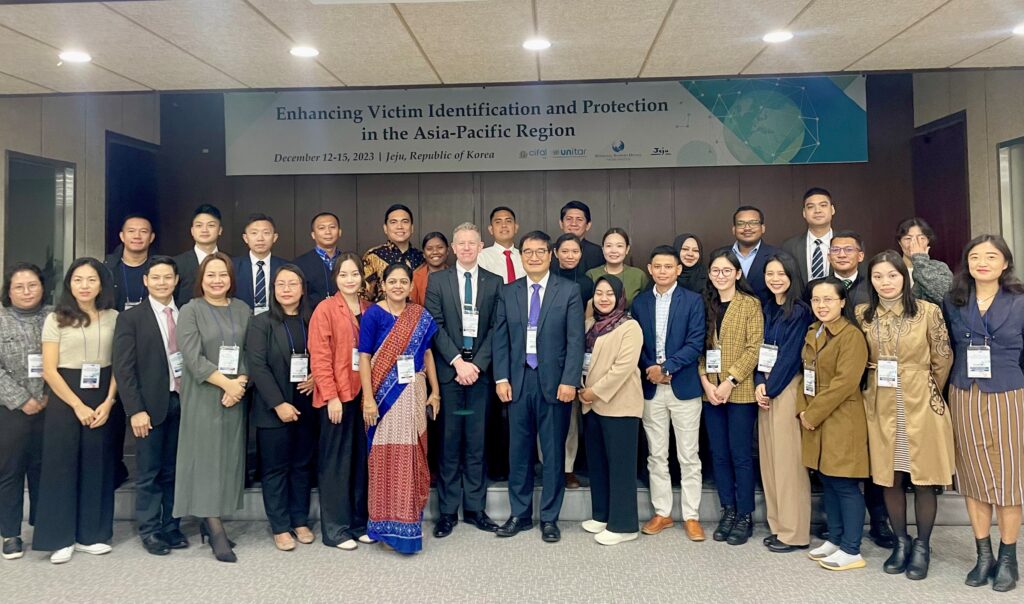
The Programme will draw on:
- The Republic of Korea’s experience integrating biometric verification and smart gate systems.
- Operational practices at Jeju Immigration Office entry regimes and tourism-driven flows.
- Regional lessons learned in border process optimisation, document security, and cross-border cooperation.
The workshop reflects the Bali Process Adelaide Strategy for Cooperation, particularly areas relating to law enforcement, border management, information sharing, and coordination. It also contributes to the 2030 Agenda for Sustainable Development, advancing SDG 16 (Peace, Justice and Strong Institutions)—specifically targets 16.2 (end abuse, exploitation, trafficking and all forms of violence against and torture of children), 16.4 (reduce illicit financial and arms flows, and combat organised crime), and 16.a (strengthen national institutions for crime prevention)—as well as SDG 10.7 (facilitate orderly, safe, and responsible migration and mobility of people).
Learning Objectives
- Strengthen understanding of modern border management systems and their core components.
- Enhance knowledge of identity verification methods, including document examination and biometric technologies.
- Improve understanding of risk-based targeting and border process design in high-volume and mixed-migration environments.
- Increase awareness of travel document security features and emerging fraud trends.
- Strengthen appreciation of cross-border data exchange mechanisms and operational information-sharing practices.
- Provide a platform for peer-to-peer exchange between APAC frontline officials.
- Facilitate structured reflection on national system gaps and reform priorities.
Audience
The workshop targets 25 officials from Bali Process Member States, including:
- Immigration and border agencies
- Airport and port authorities
- Police and law enforcement
- Ministries responsible for identity management and document issuance
- Officials engaged in data exchange and border systems development
Timeline
The training is delivered in-person over five days in Jeju Island, Republic of Korea.