
Transnational criminal groups are already testing AI’s potential to enhance trafficking in persons operations, warned experts from the Organization for Security and Co-operation in Europe (OSCE) and the Regional Support Office of the Bali Process (RSO) at the launch of a newly published joint policy brief in Vienna today.
 The caution came alongside a discussion of opportunities of the current moment, where use of AI by transnational crime groups and traffickers remains limited, and where policymakers and law enforcement have an opportunity to prepare and implement security measures before the increased adoption of AI in criminal activities, particularly generative AI.
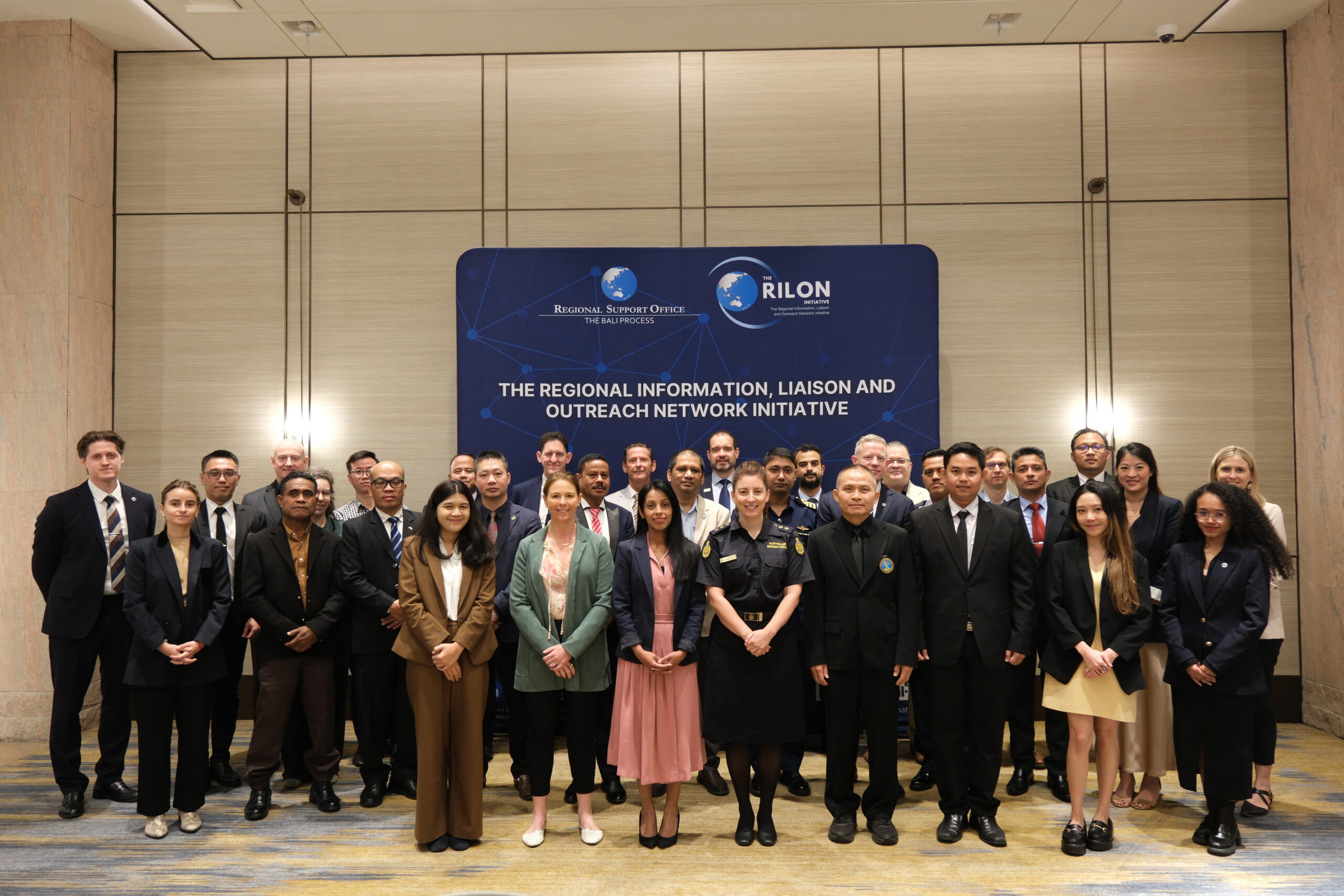
The jointly developed policy brief—‘New Frontiers: The Use of Generative Artificial Intelligence to Facilitate Trafficking in Persons’—represents a unique collaboration between the two regional organisations, bringing together insights from 98 countries across the Asia-Pacific, North America and Europe. The launch event provided a platform for representatives from both organisations’ Member States to share insights and discuss approaches to navigating the risks and opportunities presented by AI technologies.
The event highlighted the importance of a proactive and coordinated international response to pre-emptively counter the potential threat posed by transnational criminal organisations leveraging advancing AI technologies to expand their operations, deceive potential victims of trafficking, and avoid detection of criminal activities, such as trafficking but also more broadly, by law enforcement.
“Think about AI’s ability to generate highly convincing online personas, complete with fabricated backgrounds, images, and even video content filling out their social media profiles, making it increasingly difficult for people to distinguish legitimate job opportunities from trafficking recruitment efforts,” highlighted Urvi Bhatt, Counsellor (Home Affairs), Australian Permanent Mission to the United Nations in Geneva, representing the RSO Co-Managers in her opening remarks.
“Perhaps most concerningly, these AI systems can learn and adapt their approaches based on successful recruitment patterns, becoming more effective over time at exploiting human vulnerabilities. This is precisely why the timing of this report, and more importantly, our response to its findings, is critical.”
During the launch, the report’s lead author Phil Bennett presented the brief’s key findings. He outlined examples of how generative AI tools such as AI chatbots are currently being used to generate content which can overcome linguistic and cultural barriers, enabling traffickers to reach a wider range of communities in their recruitment processes and improving the efficiency of their operations.

Additionally, generative AI has the potential to be used to create convincing false job advertisements, deepfake media and other deceptive content used to recruit trafficking victims, and to provide transnational criminal organisations with increased scale through the automation of scam activities.
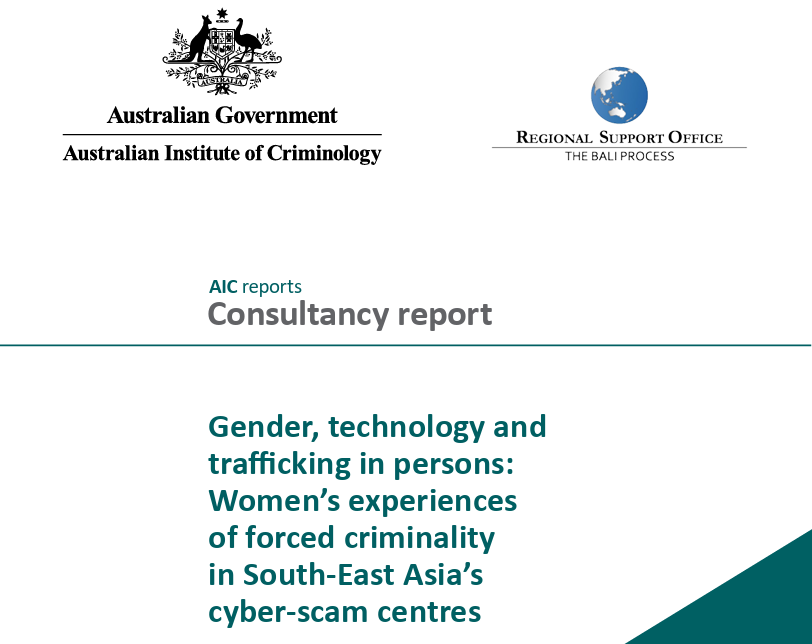
Southeast Asia has emerged as a testing ground for how transnational crime groups might exploit AI in trafficking operations. Within the region’s cyber-scam centers, where trafficking victims at an alarming scale are being forced under threat of violence to conduct online fraud and scamming, AI is already being put to use in concerning ways.
The policy brief notes that AI is changing both who is targeted for trafficking and how they are recruited. Traditionally, cyber-scam centers sought victims with specific language skills to conduct scams. Now, with AI-powered translation and language generation, these language barriers are diminishing—allowing traffickers to recruit from a much wider pool of potential victims.
“What we’re seeing now is just the beginning,” explained Ryan Winch, the RSO’s Transnational Crime and Technology Programme Manager. “As AI becomes more sophisticated and as it becomes less expensive to operate, it won’t just be about translation. Transnational crime is testing, and by all indications starting to ramp up, their use of AI’s ability to create convincing false online personas, customised job advertisements, and even use deepfakes to support their trafficking recruitment efforts. There’s the potential this could make trafficking recruitment significantly more effective in the years ahead.”

The policy brief emphasises that AI-facilitated trafficking represents a truly transnational challenge requiring coordinated international action. As transnational crime operates across borders, responses must be globally aligned to be effective. The borderless nature of AI technology means that regulatory gaps in one country or region can create vulnerabilities elsewhere.
The brief outlines several priority areas for action. These include establishing consistent policies and regulations across jurisdictions to pre-empt potentially harmful uses of AI, strengthening international law enforcement cooperation, and developing shared frameworks for monitoring AI-enabled trafficking. Particular emphasis is placed on the need for private sector engagement, and for technology companies to implement meaningful counter-trafficking measures within their AI.
The RSO remains committed to supporting Member States in developing effective responses to AI-facilitated trafficking in persons. Through regular briefings, technical support, and facilitating regional and cross-regional dialogue, the RSO will continue to promote coordinated approaches to AI-related policy and capacity building.
Success in preventing the criminal exploitation of AI will depend on sustained engagement between governments, technology companies, and civil society organisations. The RSO looks forward to supporting further collaboration between these stakeholders to strengthen prevention and protection measures across the region.
For further information about the brief or to discuss opportunities for collaboration, please contact the RSO at info@rso.baliprocess.net or Ryan Winch, Transnational Crime and Technology Programme Manager at ryan.winch@rso.baliprocess.net.
The full policy brief is available here