Cooperation Beyond Borders
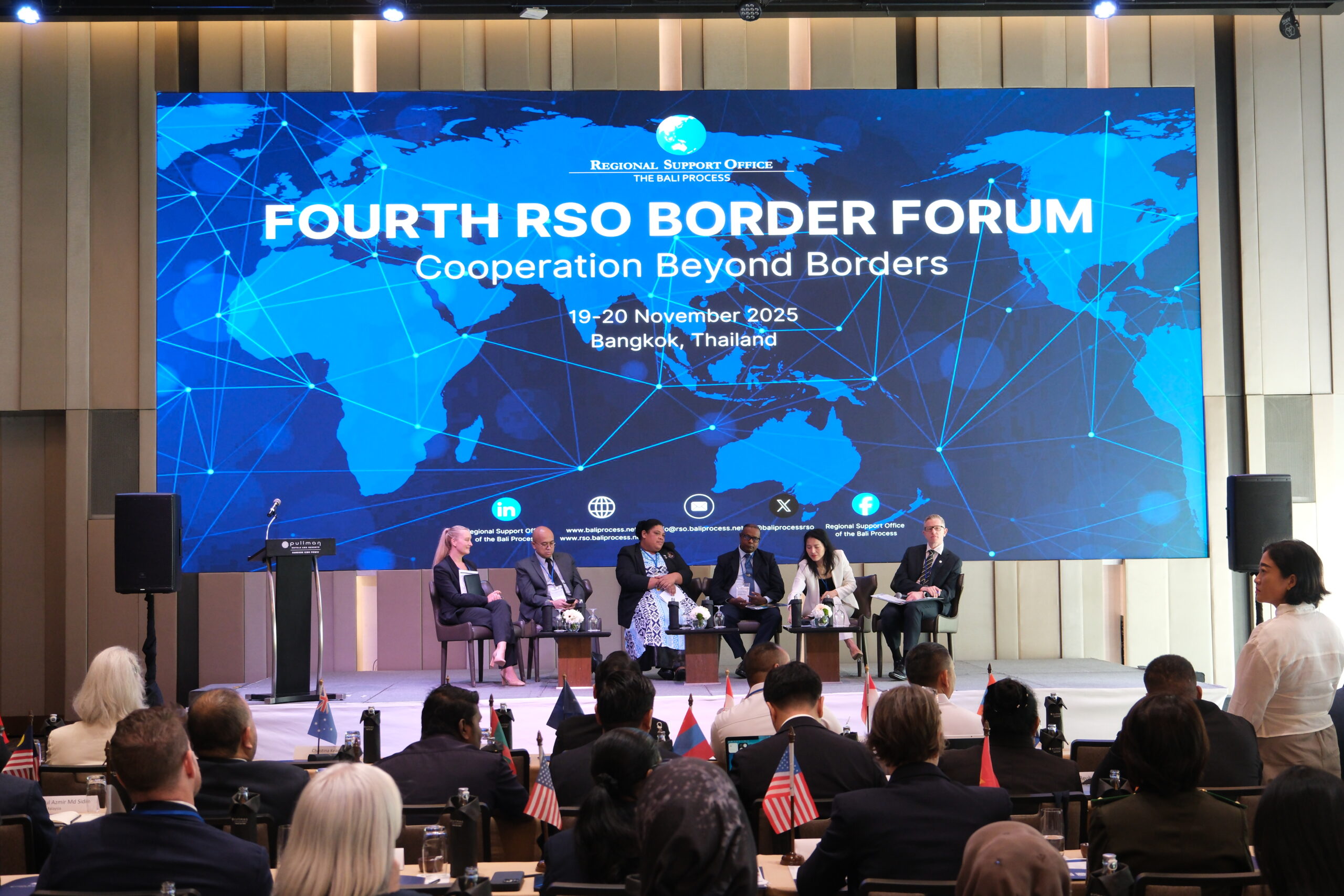
Fourth Border Forum Outcome Report | 19–20 November 2025, Bangkok, Thailand
Where cooperation works, and where it stalls
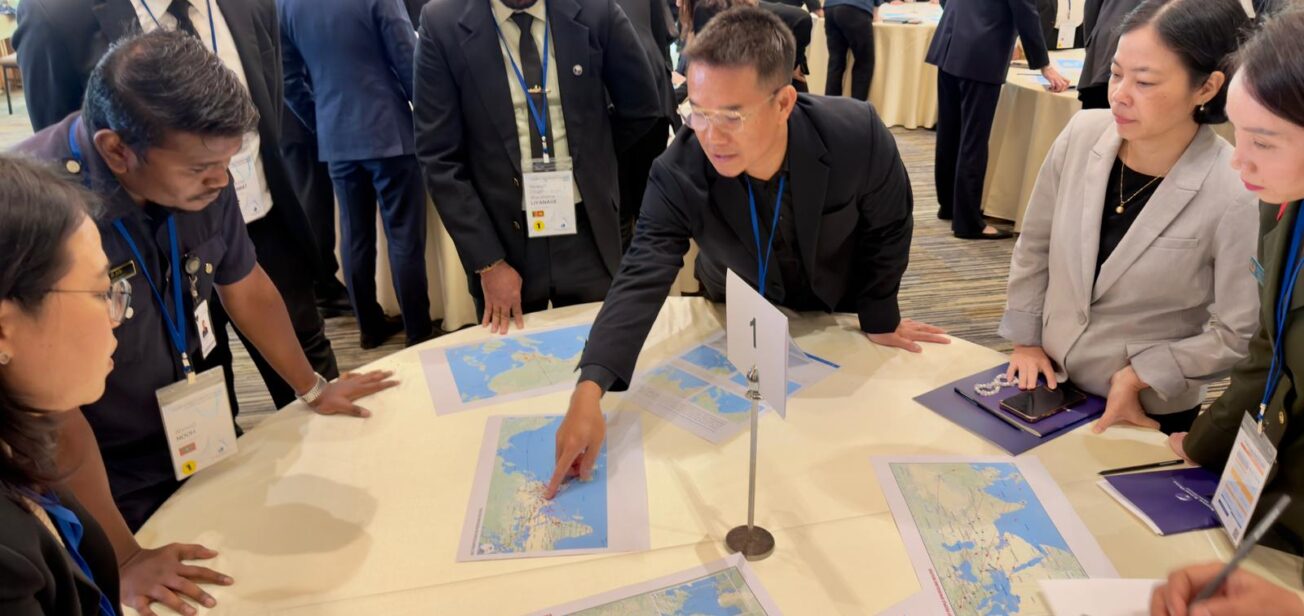
Delegates worked through realistic cases from their own border posts, tracing the full route of travel. Select a stage to see what they reported.
What delegates saw
- Genuine visas paired with forged supporting documents
- AI-generated visa artefacts and substituted photos
- Boarding-pass swaps, and genuine and forged documents combined, including for children
Where systems stall
- Weak face-to-passport checks by some carriers
- Uneven access to API and PNR systems
- Differing privacy rules and system compatibility limit consistent use of passenger data
What helps
- Use API/PNR, CCTV and booking data to identify facilitators and route patterns, not only individual passengers
- Stronger engagement with airports and airlines
- Share newly identified modus operandi across airports quickly
What delegates saw
- Thailand and Malaysia remain central hubs for multiple route types
- Fiji and other Pacific jurisdictions now appear as transit hubs; the Maldives may be under-detected
- Seasonal Rohingya movements in the Bay of Bengal and Andaman Sea, with high mortality risk
- Looping pathways through Thailand, Myanmar, Laos and Cambodia to evade detection
Where systems stall
- Inconsistent procedures in transit zones
- Limited real-time verification support and liaison channels
- Inconsistent coastal surveillance and uncoordinated patrols create exploitable seams
- Networks exploit delays between source, transit and destination responses
What helps
- Predictable liaison channels and focal-point networks along major routes, including Pacific and South Asian hubs
- Coordinated inter-agency and cross-border patrol tasking
- Earlier information exchange on suspicious movement and facilitators
What delegates saw
- Auto-gates and e-gates cut officer–traveller interaction time
- Victims misidentified as offenders, irregular migrants or uncooperative travellers
- Tourist pathways used to enter for employment
- Victims hard to spot amid heavy tourism flows
Where systems stall
- Time pressure, lack of privacy and unclear referral pathways
- Procedures geared to enforcement rather than protection
- Late-stage interdiction instead of earlier disruption
What helps
- Integrate trauma-informed interviewing into standard training
- Adjust SOPs so officers can trigger protective referrals when indicators appear
- Upstream risk management through API/PNR, intelligence sharing and clear escalation pathways
What delegates saw
- Victims fly in, then move overland into scam compounds in Myanmar, Laos or Cambodia
- Facilitators shifting victims into smaller residential compounds
- Some victims later sold into sexual exploitation
- Mining, fishing and logging workers overstaying and becoming vulnerable
Where systems stall
- Individuals may be victims, witnesses and alleged offenders at once
- Limited surge capacity and unclear mandates during sudden influxes
- Missing-migrant systems activate only after remains are recovered
- Cooperation still relies on personal relationships
What helps
- Task forces combining border, law enforcement, cyber and financial expertise
- Scam-compound scenarios built into screening and contingency planning
- Regional focal points on missing migrants and unidentified remains
- Institutionalised cooperation that outlasts individual postings
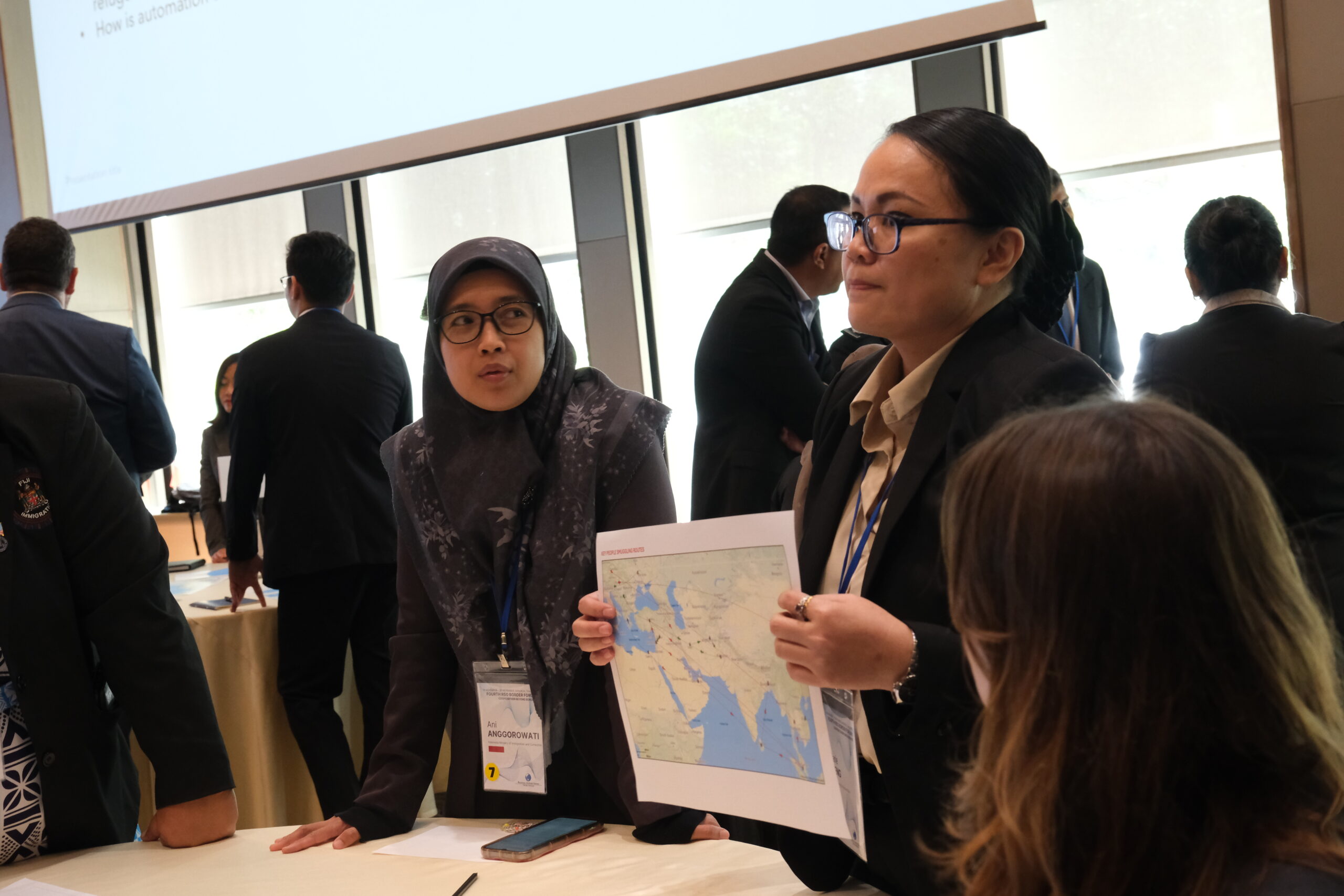
A core methodology of the Fourth Border Forum was the comparative route analysis. Delegates revisited trafficking and smuggling route maps developed at the Third RSO Border Forum, testing these against current observations. This approach alowed delegates to identify which routes remain active, where criminal networks have adapted, and what operational pressures these shifts create at different points of the journey.
Shifts since the Third Border Forum
Broader range of source countries: Flows now extend beyond South and Southeast Asia, with more movements involving Ethiopia, Kenya, Syria, Iran, Japan and the Republic of Korea.
Changes in trafficking routing: Movements from Mongolia through Viet Nam, Hong Kong or Beijing toward Cambodia or Myanmar have grown.
Evolving document tactics: More combinations of genuine and forged documents, including for children, plus AI-generated visa artefacts, substituted photos and misuse of pilgrimage travel.
Pacific transit points: Fiji and other Pacific jurisdictions increasingly serve as transit hubs rather than destinations. The Maldives was flagged as a possible under-detected transit location.
Trafficking into cyber-scam centres: Thailand and Kuala Lumpur remain major gateways. Victims are increasingly moved into smaller residential compounds, and some later into sexual exploitation.
Pressure points at the border: Auto-gates speed processing but limit behavioural observation. API and PNR add value where implemented, but privacy rules and compatibility gaps persist.

Continuing patterns
Bay of Bengal and Andaman Sea: Seasonal Rohingya movements continue with high mortality risks. Smugglers and armed groups influence departure points and timing.
Air-led routes to Europe and North America: Transit through Kuala Lumpur, Hong Kong, Beijing and parts of Latin America, using genuine visas with forged support documents and boarding-pass swaps.
Routes toward Australia and New Zealand: Direct smuggling attempts have decreased in some contexts, as networks shift to distant staging points and document manipulation in third countries.
Forced criminality in the Mekong: Victims enter through airports, then move overland into scam compounds in Myanmar, Laos or Cambodia.
Thailand and Malaysia as hubs: Both remain central transit points for multiple route types.
Sector-linked exploitation: Mining, fishing and logging continue to draw irregular workers who overstay and become vulnerable to exploitation.


Actionable Recommendations
These recommendations consolidate recurring priorities identified across plenaries, group work and workshops. Select a recommendation from the dropdown below to learn more.
Enable timely operational information-sharing
Create predictable liaison channels and focal‑point networks along major routes, including Pacific and South Asian hubs. Agree on simple operational parameters for sharing red flags, modus operandi and anonymised trends. Strengthen use of existing liaison networks for quick alerts. Promote non‑sensitive trend data to support shared risk analysis. Develop clear standard operating procedures (SOPs) for time‑critical sharing.
Integrate responses to converging cyber/fraud and trafficking/integrity risks
Bring border, law‑enforcement, financial and tech partners together to map shared risks. Support cooperation on digital evidence, online recruitment patterns and scam‑centre trafficking. Embed corruption and insider‑risk mitigation in border‑security planning. Develop task‑force models combining border, cyber and financial expertise. Integrate scam‑compound scenarios into screening and contingency planning.
Improve identification and referral of victims of forced criminality
Integrate trauma‑informed interviewing into standard training. Adjust SOPs to allow protective referrals when indicators appear. Strengthen cooperation between border agencies, referral mechanisms and Non-Governmental Organisations (NGOs).
Strengthen frontline capability through realistic, targeted training
Identify priority roles needing specialised training (e.g., document examiners, interviewing officers, maritime coordinators). Build modular, scenario‑based training packages drawn from Forum workshops. Encourage mixed‑country participation to strengthen cooperative habits. Prioritise training on scam‑centre victims, complex transit‑zone cases and child‑protection risks.
Strengthen crossborder responses for missing migrants
Establish regional focal‑point networks on missing migrants and unidentified remains. Create clear SOPs distinguishing missing from deceased cases. Explore frameworks for sharing ante‑ and post‑mortem data in line with privacy standards. Link missing‑migrant work with civil registration and legal identity efforts
The Fourth RSO Border Forum was attended by Australia, Bangladesh, Bhutan, Cambodia, Canada, China, Fiji, Finland, France, Germany, Indonesia, Italy, Lao PDR, Malaysia, Maldives, Mongolia, Nauru, New Zealand, Norway, Pakistan, Palau, Philippines, Republic of Korea, Solomon Islands, Spain, Sri Lanka, Thailand, Timor-Leste, Tonga, United Kingdom, United States of America and Viet Nam.
Organisations represented include the ASEAN-Australia Counter Trafficking, Blue Dragon Children’s Foundation, Freedom Colaborative, Global Initiative Against Transnational Crime, the International Organization for Migration (IOM), the Office of the United Nations High Commissioner for Human Rights (OHCHR), ReCAAP Information Sharing Centre, Tori International and the United Nations Office on Drugs and Crime (UNODC). The Forum also benefited from the participation of RSO Alumni and liaison-network practitioners, whose operational experience strengthened peer exchange and practical problem-solving across sessions.