



Objectives
- Identify migration trends relating to natural and humanitarian disasters and the potential impact of combined second and third order effects on Bali Process Members’ efforts to counter trafficking in persons, people smuggling, and related transnational crime.
- Share Bali Process Members’ current practice in national and subregional emergency response mechanisms to inform and improve preparedness for emergency irregular migration situations and raise awareness of humanitarian approaches to border management to improve support for people in need of protection during emergency events.
- Establish pathways for multilateral collaboration between Bali Process Members on migration crisis planning and preparedness, and priorities for further cooperation to address perceived resource, capability, and service requirements in support of Member States – including through the Bali Process Task Force on Planning & Preparedness (TFPP).
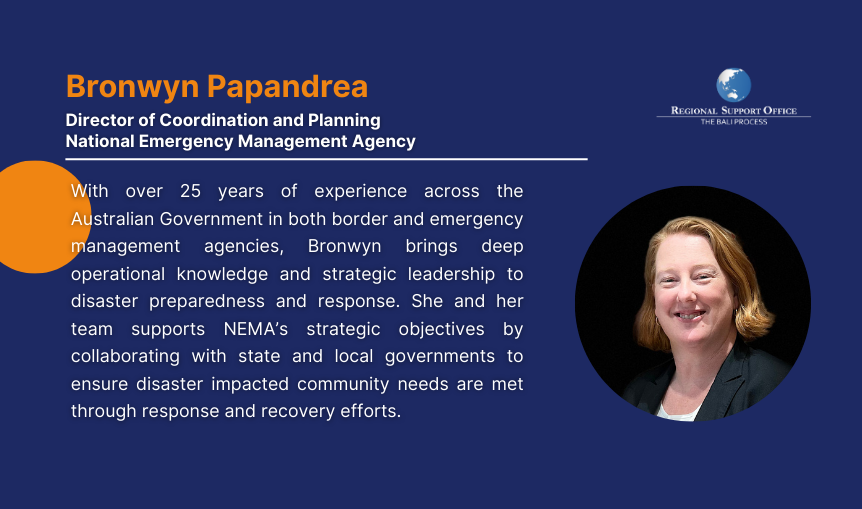
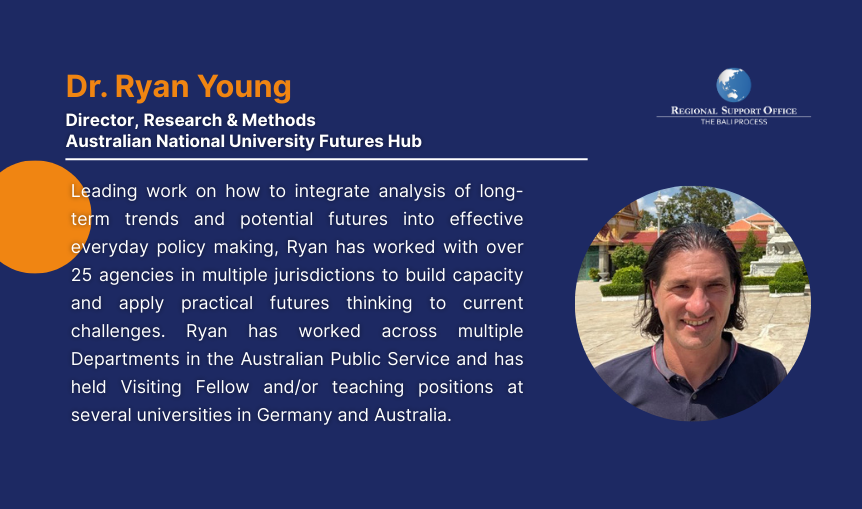
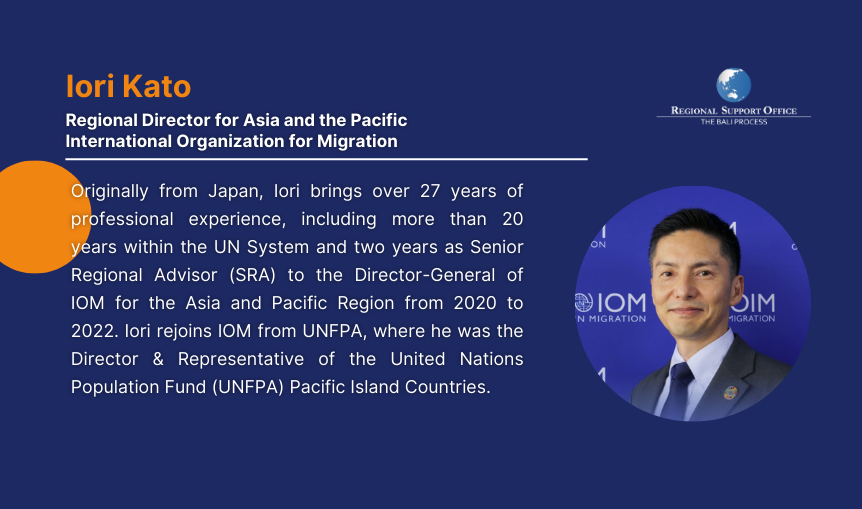
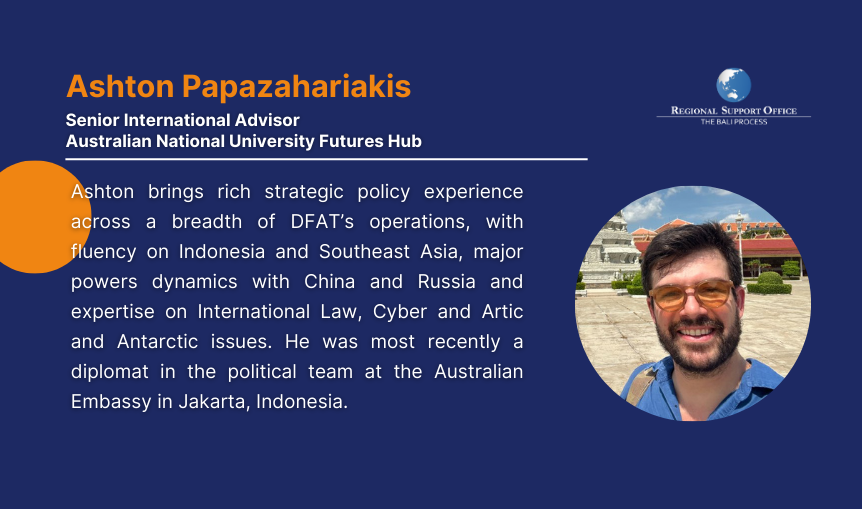
Crisis Preparedness Forum Outcome Statement
The Crisis Preparedness Forum reinforced the Bali Process’s emphasis on practical, applied cooperation. The Outcome Statement is a consolidation of the insights shared by Member States who participated and key learnings that will inform future RSO capability building activities.

Impact of Natural and Humanitarian Disasters on Irregular Migration, and Irregular Labour Migration in the Bali Process Region
Sudden events like cyclones, floods, and earthquakes, along with slow-onset crises such as climate change, prolonged droughts or food insecurity, layered with conflict and economic stressors drive vulnerable populations to consider irregular migration as a coping mechanism.
This report maps literature published between 2019–2024, identifying 40 knowledge gaps and six priority areas for future research and policymaking across the Bali Process region to guide coherent and evidence-based policymaking and well-informed public discourse to address irregular migration in the Bali Process region. It also assesses the current state of knowledge on the impact of natural and humanitarian disasters on irregular migration and irregular labour mobility.

Disaster and displacement in the Asia Pacific: new realities and challenges
For the most vulnerable, natural disasters and humanitarian crises can widen protection gaps as they collide with existing displacement and transit dynamics. Loss of shelter, livelihoods, or documentation leaves people harder to identify and assist, while sudden movements complicate screening and referral processes. This places additional strain on border, immigration, health, and humanitarian systems that are already stretched, underscoring the need for coordination regional preparedness.
Read more in a blog by the RSO on ‘Disaster and displacement in the Asia Pacific: new realities and challenges’.
