

What the job ad isn't showing you
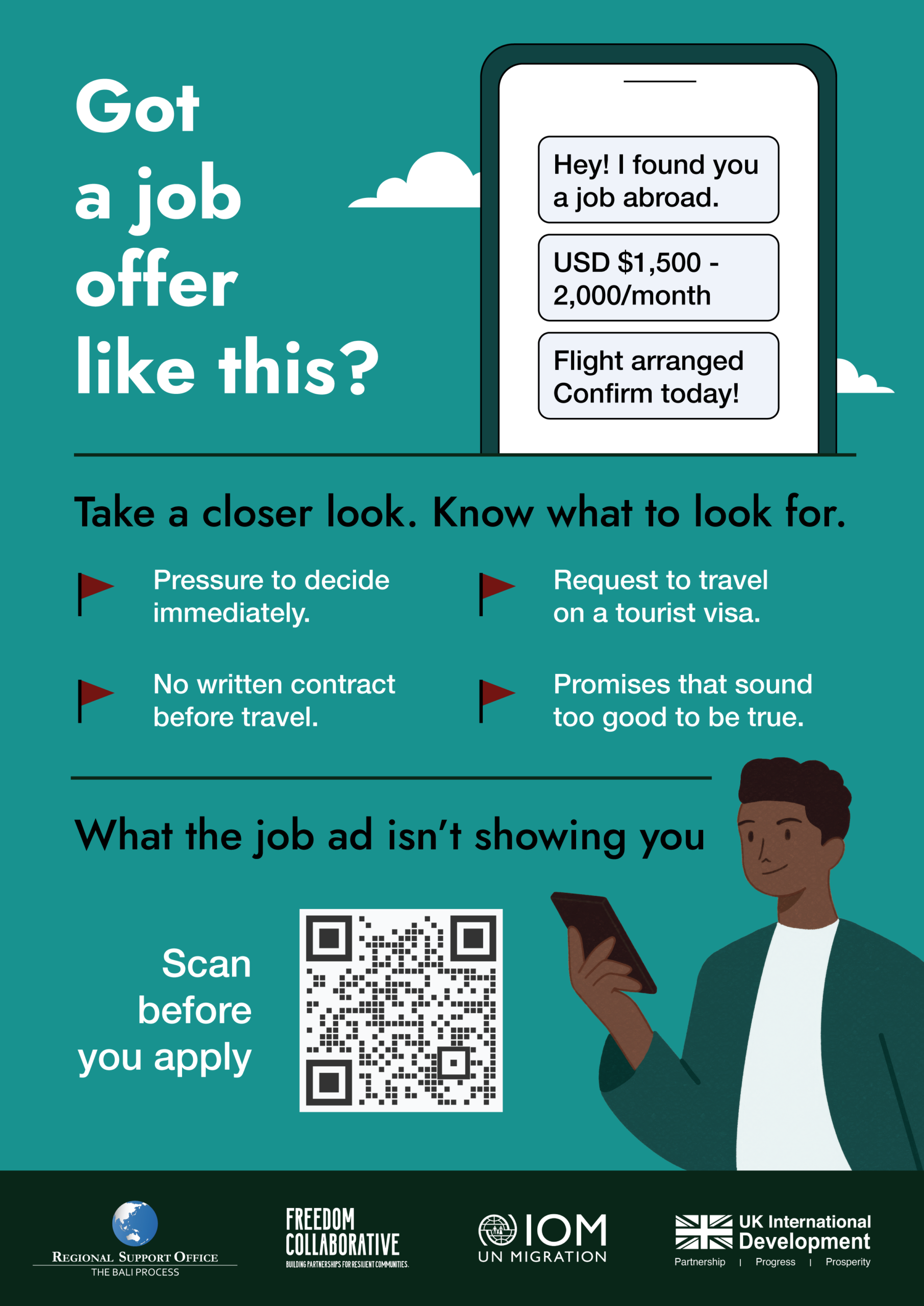
Thinking about a job abroad? Most overseas jobs are real. Some are not, and the fake ones are hard to spot. A few checks before you say yes can protect you.
How to check a job offer
Checking an offer means confirming that the recruiter, the employer and the job all exist as described, using sources the recruiter doesn’t control. Anything they hand you, documents, websites, phone numbers, references, could be part of the same story. Most of these steps take minutes.
1. Check the recruiter is licensed. Most countries keep an official list of licensed recruitment agencies, check national resources in the following section to verify. If you’re using an agent or recruiter, search their name, confirm if they’re legitimate. Resources to verify are available below:


2. Check the employer. Search the company name together with words like “scam”, “review” or “complaint”. Find the company’s official contact details yourself, not from the ad, and ask them to confirm the vacancy. Run the ad’s photos through a reverse image search as stolen office photos are common and others may have already reported some fraudulent job ads online. Consider contacting your embassy or consulate abroad as well if you remain unsure.
3. Get the contract in writing before you travel. In a language you understand, with the employer’s name, your job, salary, hours and location. Check it matches what you were promised. If an employer will not put the terms in writing, treat that refusal as an answer in itself.
4. Check the visa matches the job. A real employer arranges a work visa for the country you’ll work in, before you go. If you’re told to travel on a tourist visa and fix it later, treat the offer as unsafe. Your embassy or consulate in the country you are travelling to can tell you what visa the job should carry.
5. Talk to people you trust. Tell someone you trust the full details: employer name, address, salary, visa. Ask a migrant resource centre or workers’ organisation about the agency. If you can, contact your country’s embassy in the destination and ask them to confirm the employer is known.
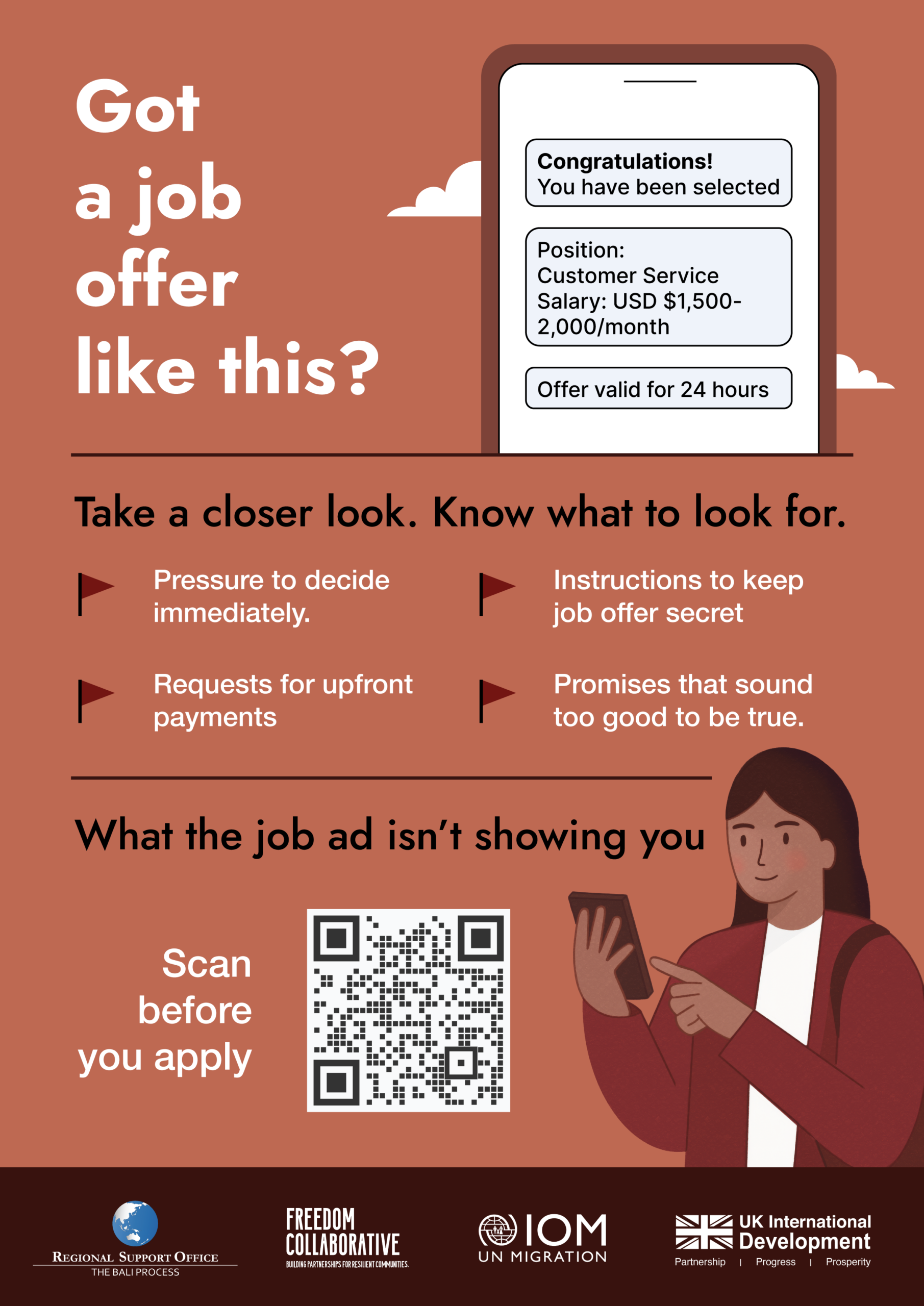
6. If you can’t verify, don’t travel. If the recruiter or proposed employer fails any one of these, no license, upfront fees, no written contract, wrong visa, or insists on secrecy, walk away, whatever the salary.
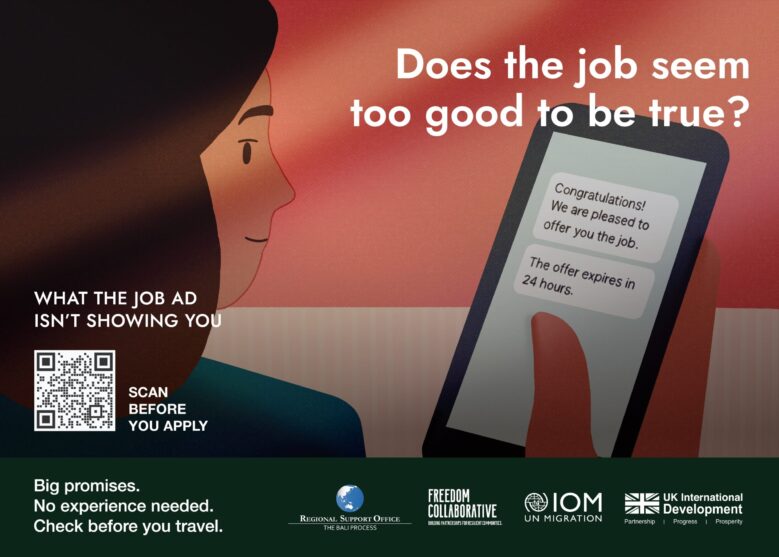
A genuine job will withstand basic questions and you taking time to confirm, an offer that cannot wait is a warning in itself.

Hundreds of thousands of individuals have been trafficked into cyber-scam centres, and most arrived the same way, through a job offer that looked real.
Behind some of these offers are transnational organised crime groups running cyber-scam centres. They advertise ordinary-sounding jobs, customer service, IT, sales, translation. When those seeking jobs arrive, their passports are taken and they are forced to work, scamming others, unable to leave. This has happened to graduates, to professionals, to people who had worked abroad before. The people who ended up there were not careless.
The offers looked real, the interviews felt real, and the company websites looked professional. Education and experience are not protection on their own. Checking is.
Hear one survivor describe what happened, and why he checked too late:
Video length: 2min
Worried about someone?
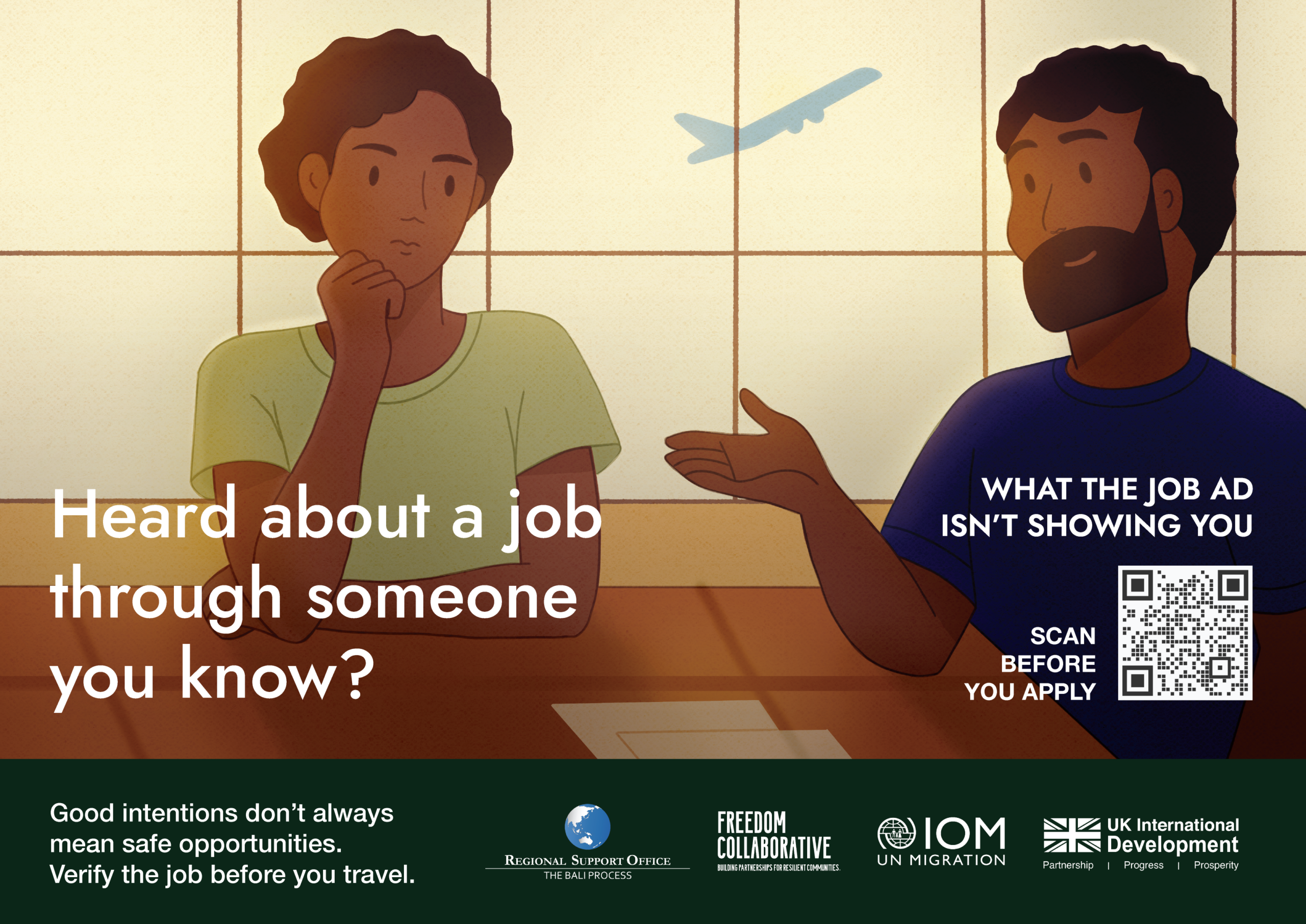
Decisions about working abroad are often family decisions, and family and friends are often the first to sense something is wrong, and the best placed to act.
Before they travel, worry if they are being rushed, are vague or secretive about the employer, have paid fees, or are travelling on a tourist visa for a job. Rather than opposing their plans, offer to help with the verification: ask for the employer’s name and address, the contract, the visa type, and offer to look up the recruiter on the official registry together.
After they travel, worry if they go quiet, can’t speak freely on calls, describe a different job from the one promised, or suddenly need money for “fines” or “fees”. You can contact the services on this page yourself, you don’t need their permission if you’re worried they’re at risk, and you won’t get them into trouble by asking for advice.

📍Southeast Asia
Indonesia
- Indonesia Emergency Call Centre: 112
- Indonesia National Police: 110
- Ministry of Migrant Worker Protection (BP2MI) Hotline: 0800-1000 / WhatsApp number at 0811-8080-141
Malaysia
- National Anti-Trafficking Hotline, Council for Anti-Trafficking in Persons and Anti-Smuggling of Migrants: 03-8000 8000
Thailand
- Thailand Anti-Human Trafficking Centre (TATIP), Royal Thai Police Hotline – 1599 (toll free, 24/7)
- Anti-Trafficking in Persons Division (ATPD), Royal Thai Police Hotline – 1191 (toll free)
- Ministry of Social Development and Human Security One-Stop Service Call Centre (OSCC) Hotline – 1300 (toll free)
- Department of Special Investigation (DSI) Hotline – 1202 (toll free, operating hours during government working hours only 8.30-16.30)
📍South Asia
Bangladesh
- Bangladesh Child Helpline: 1098 (24/7, free + confidential, supports children and youth in Bangladesh)
- National Helpline Center for Violence Against Women: 10921
- IOM Bangladesh Country Office: 09609006360
- Justice & Care Bangladesh: info.bangladesh@justiceandcarebd.org / +880 9678 800692
- Young Power in Social Action (YPSA) Helpline: +880 241 388 313 / +880 241 388 314 / https://ypsa.org
- BRAC: +8802222281265 / https://brac.net/
Pakistan
- National Trafficking in Person Hotline, Federal Investigation Agency (FIA): 111-247-786
- Migrant Resource Centre (MRC) Pakistan Hotline: +92 304 1112123 / WhatsApp: +92 300 0116671, +92 306 0191919, +92 328 5473023 / Email: info@mrc.org.pk / https://www.mrc.org.pk/en/
- Sustainable Social Development Organization (SSDO): +92 51 8433431 (WhatsApp or messaging support lines and Case consultation contacts) / ssdo.org.pk
Sri Lanka
- Sri Lanka National Child Protection Authority Hotline: 1929 (24/7, toll free, Sinhala, Tamil and English language support)
- Sri Lanka National Anti-Human Trafficking Task Force Hotline: +94 0768447700
- Sri Lanka Police Child and Women’s Bureau Hotline: 109
- Association of Mobilizing Community Resources (AMCOR) Helplines: +94 (65) 222 7416 / WhatsApp or messaging support lines: +94 77 357 2020 / https://amcor.lk
- SAFE Foundation: +947060000 / WhatsApp: +94704727835 / https://safesrilanka.org
📍Africa and the Middle East
Ethiopia
- Ethiopia National Anti-Human Trafficking Hotline: 8797
- Toll-free Addis Ababa Hotline for Victims of Internal Trafficking: 6073 (24/7 line for reporting trafficking crimes and getting referred to services within the capital)
- Nigat Global Initiative: +251 968 999 977 / Email: contact@nigatglobal.org
- African Network for the Prevention and Protection Against Child Abuse and Neglect (ANPPCAN): +251 115 505202 / Email: Info@anppcan-ethiopia.org / https://anppcan-ethiopia.org
- Good Samaritan Ethiopia: +251 111 242952 / Email: Goodsamaritan1996@gmail.com / https://gsaethiopia.org
Kenya
- 999 or 112 (Kenya’s general police emergency lines) – will connect you to police who can escalate to the Anti-Human Trafficking and Child Protection Unit (AHTCPU).
- 116 – A free, 24/7 national helpline specifically for children in danger, including trafficking and abuse cases.
- HAART Kenya Helpline: +254 780211113 (also on WhatsApp) /+254 738506264 https://haartkenya.org/
- Set Free To Thrive Helpline: +254 702216633 (also on whatsApp) https://sftkenya.org
- Counter Human Trafficking Trust-East Africa (CHTEA) Helpline: +254701339204, Email: info@chttrust-eastafrica.org / https://chttrust-eastafrica.org
- Survivor Network Kenya: survivorsnetworkkenya@gmail.com https://www.survivorsnetworkkenya.org
- IOM Nairobi Call Centre: +254 709155555
Uganda
- RAHAB Uganda Helpline: +256750903323/ +256 753637710 / WhatsApp +256754060860 / +256 772414639; Consultation/Referrals: info@rahabuganda.org Website: https://rahabuganda.org
- Willow International/EverFree: +256741404882 everfree.org
- Trafficking Hotline for The Ministry of Gender, Labor, and Social Development (MGLSD): 116 / SMS Shortcode: Text U-Report to 8500 / Email: info@sauti.mglsd.go.ug / Website: https://sauti.mglsd.go.ug/sauti/report
- Directorate of Citizenship and Immigration Control (DCIC) Hotline: 0800199003 or 0800199004 (24-hour toll-free hotline for general information, including reporting trafficking crimes)
- The Uganda Police Force CID Unit – Anti-Human Trafficking Department: +256 782 275 350
- Coordination Office on Prevention of Trafficking in Persons at the Ministry of Internal Affairs (COPTIP)- +256 782 574 523

United Arab Emirates
- UAE labor/trafficking hotline (MOHRE): +971600590000 (Also available on WhatsApp) / a 24-hour toll-free line for reporting trafficking, unpaid wages, or labor violations, available in Arabic, English, Russian, and Urdu — calls flagged as potential trafficking are automatically routed to police.
- Dubai Police – Human Trafficking Hotline: +9718007283
- Dubai Police – Control Center of Human Trafficking: +9714-6082347 (also handles reports, and can arrange support like temporary shelter, temporary visas, and repatriation tickets)
- Dubai Foundation for Women and Children (DFWAC): +971 800 111 (WhatsApp) (for reporting trafficking, domestic violence, or abuse. also gives access to psychiatric, social, or legal advice)




An overview of trafficking for forced criminality into cyber-scam centres published by GI-TOC, RSO and ASEAN-ACT
Women’s Experiences of Forced Criminality in South‑East Asia’s Cyber‑scam Centres