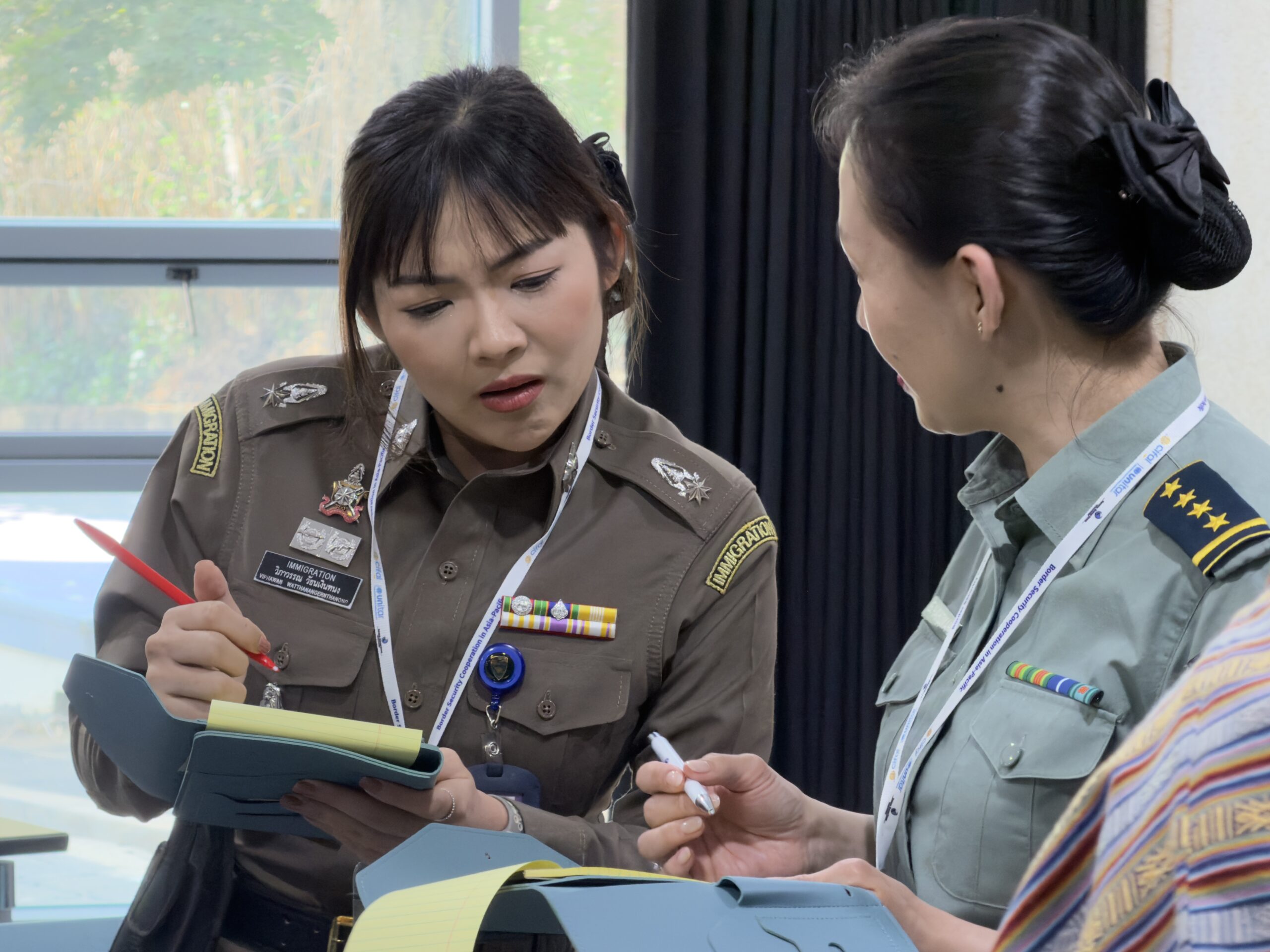

Trafficking for forced criminality into cyber-scam centres remains an evolving challenge, both geographically and in complexity, across Southeast Asia. Women experience a distinct landscape of vulnerability in this context, and new research released by the Australian Institute of Criminology (AIC) and the RSO, exposes the underexplored realities faced by women trafficked into cyber-scam centres across Southeast Asia.
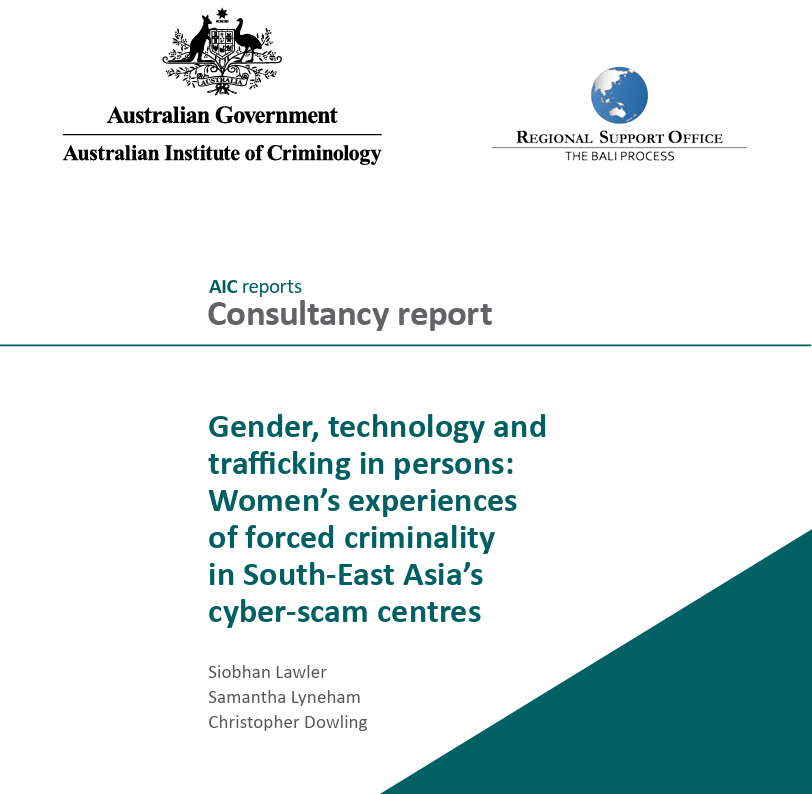
The report, Gender, technology and trafficking in persons: Women’s experiences of forced criminality in Southeast Asia’s cyber scam centres, draws on three regional focus groups, consultations with 86 stakeholders and interviews with survivors of trafficking into cyber-scam centres.
The research finds that women and girls are most often recruited from people they trust, including friends, family members, and romantic partners, rather than anonymous online advertisements. Traffickers deliberately exploit personal relationships to lower suspicion, meaning prevention efforts that focus solely on online recruitment overlook a major source of risk. Once inside cyber-scam centres, women are forced to carry out large‑scale online fraud, most commonly romance investment scams, often under constant surveillance, extreme working hours and punishment used to enforce compliance. Many are required to adopt false identities and maintain multiple fabricated relationships.
“Ultimately, the report makes clear that cyber-scam centres are not just hubs of financial crime — they are sites of serious human rights abuse. Behind every scam message sent, there may be a woman working under threat and fear, trying to survive long enough to get home.”
“We know how much damage these cyber-scam centres cause within Australian society via the AIC Cybercrime Report 2024 and through powerful storytelling, this report reveals the damage done to the exploited women and girls in these centres,” said AIC Deputy Director Dr Rick Brown.
“We need to continue to work with our international partners to raise awareness so that policy can shape a response to the heart of the problem.”
Forced criminality is rarely the only abuse. The report documents layered exploitation, including sexual violence and coercion, unpaid domestic or service labour and, in some cases, re‑trafficking into brothels, often occurring simultaneously. Criminal networks deliberately use women as the ‘face’ and “voice” of scams, forcing them into video and voice calls that rely on gender stereotypes, emotional labour and increasingly artificial intelligence and deepfake technologies.
Women who resist, underperform or attempt to escape face heightened risks, including being sold to other criminal operations or trafficked into sexual exploitation. Pregnancy, illness or becoming a financial liability are among the few circumstances in which women may be released, often without protection or support. Even after escape or rescue, many struggle to be recognised as victims and are misidentified as offenders because they were coerced into facilitating scams or recruiting others. Inconsistent laws and weak application of the international non‑punishment principle mean some survivors are detained, charged or denied access to support.
Women leaving cyber-scam centres often experience severe trauma, pregnancy, mental health crises and limited access to long‑term reintegration assistance. Without gender‑responsive aftercare, many remain vulnerable to re‑trafficking and ongoing harm.
Lindsay Erjavic, Programme Officer (Transnational Crime and Technology), RSO said: “What this research shows is that woman experience a distinct set of challenges when trafficked into cyber-scam centres, and as such, require tailored support that holds their experiences in mind. Women are often recruited through people they know and trust, and the report highlights this as one of several instances where women face vulnerabilities distinct from their male counterparts. Concerning, for example, sexual violence is also a frequently documented tool of control. When they finally leave, many encounter support systems that weren’t designed with their specific needs in mind, leaving them at risk of further harm.
“Designing effective responses must hold women’s unique vulnerabilities and experiences as a central part of planning, not a secondary consideration.”
The report situates these experiences within the rapid expansion of cyber-scam centres across Southeast Asia, driven by transnational organised crime networks exploiting new technologies, weak regulation and global inequality. It calls for coordinated, gender‑responsive action, including prevention campaigns that reflect how women are recruited, improved victim identification, stronger protections against criminalisation, and access to specialised mental health, reproductive health and reintegration support.
Download the full report here.