
7-10 April 2026 • Hanoi, Viet Nam
Trafficking in persons in Viet Nam and the wider Mekong subregion is increasingly cross-border and technology-enabled. Transnational organised crime groups are using social media for recruitment and exploiting jurisdictional differences to evade detection. For frontline law enforcement officers, keeping pace with these shifts requires more than foundational knowledge— it demands practical skills in digital evidence collection, victim interviewing, and cross-border cooperation.
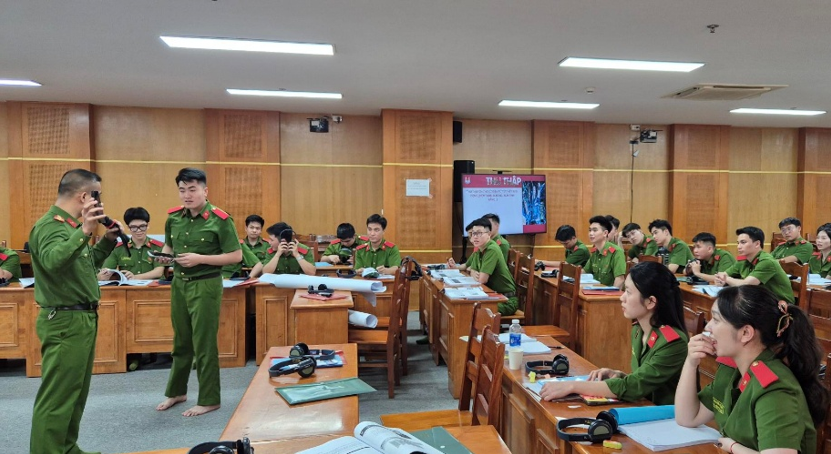
170 total Vietnamese cadets engaging in discussions at the Academy classroom
In April, the RSO and the People’s Police Academy of Viet Nam (PPA) jointly delivered two consecutive iterations of an Introductory Workshop on Combating Trafficking in Persons to 170 third-year cadets majoring in criminal investigation. This marked the sixth time the workshop has been held since the RSO and PPA began working together in 2016, continuing a partnership that has progressively strengthened counter-trafficking capabilities within Viet Nam’s law enforcement institutions.
An evolving threat landscape
The programme brought together trainers from the PPA, the Ministry of Foreign Affairs of Viet Nam, and civil society to examine how trafficking in persons cases are identified, investigated, and supported in practice. Discussions highlighted that cases affecting Viet Nam are increasingly linked to social media recruitment and exploitation along cross-border corridors, while also intersecting with irregular migration, document fraud, and people smuggling. Online anonymity and differences in legal and procedural frameworks across jurisdictions were identified as compounding investigative challenges, underscoring the need for stronger capabilities in digital evidence collection and cross border cooperation.
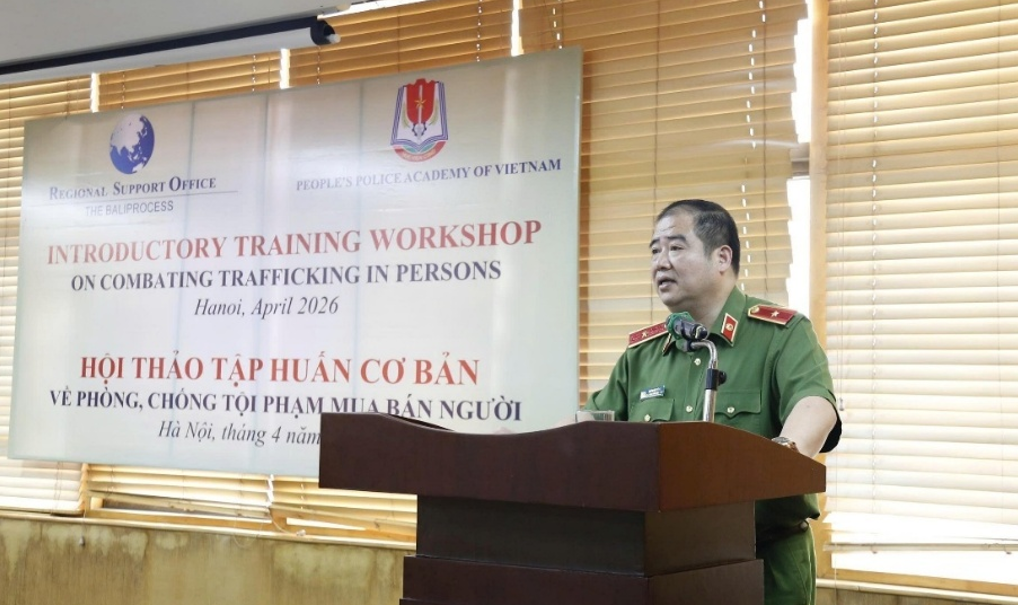
Major General Chu Van Dzung, Vice President of the PPA
Victim-centred approaches to support effective investigations
The workshop also reinforced the importance of victim-centred and trauma-informed approaches in effective investigations. Perspectives shared by Thuy An of Peace House, Centre for Women’s Development, highlighted how early engagement by law enforcement, safe handling practices, and structured case management can contribute to both survivor wellbeing and investigative outcomes. Representatives from the Ministry of Foreign Affairs presented their role in coordinating victim identification, protection and repatriation under Viet Nam’s updated legal framework, demonstrating how overseas missions and domestic authorities collaborate on cross-border cases.
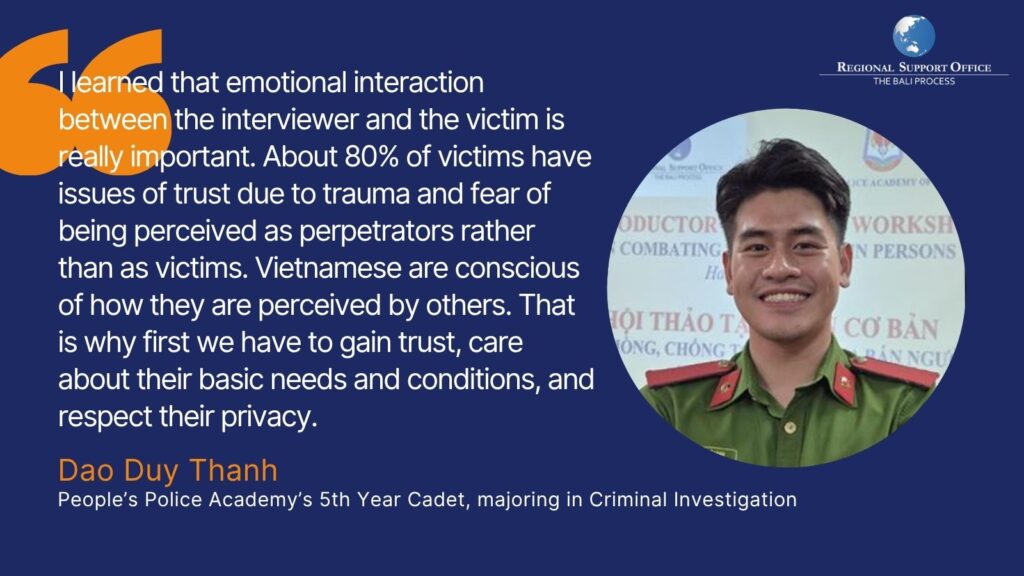
PPA’s Cadet reflection on the training
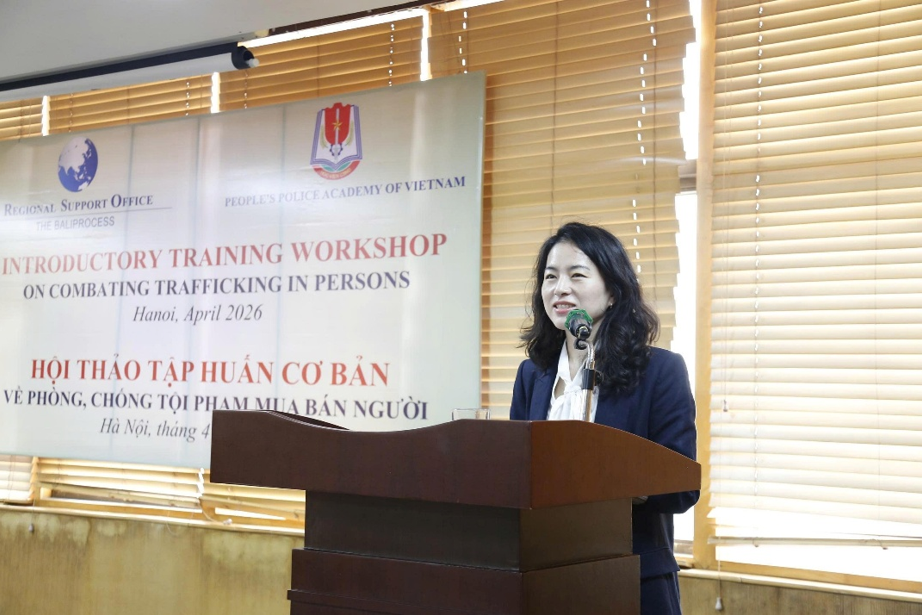
Eun Jung Yi, Programme Manager, RSO Border and Migration Management team
Looking ahead
The workshop identified emerging priorities for future engagement, including stronger capabilities in digital evidence collection, interviewing techniques and cross-border cooperation. The RSO will continue supporting institutional capacity building in the region, refining course materials based on participant feedback and embedding specialised content within national law enforcement training programmes.
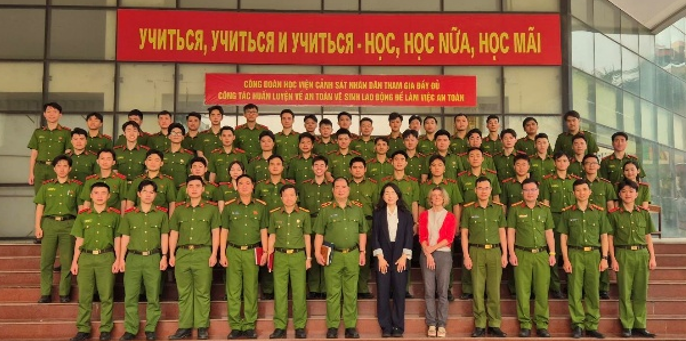
Speakers, facilitators and training participants official class photo of the 2026 RSO workshop